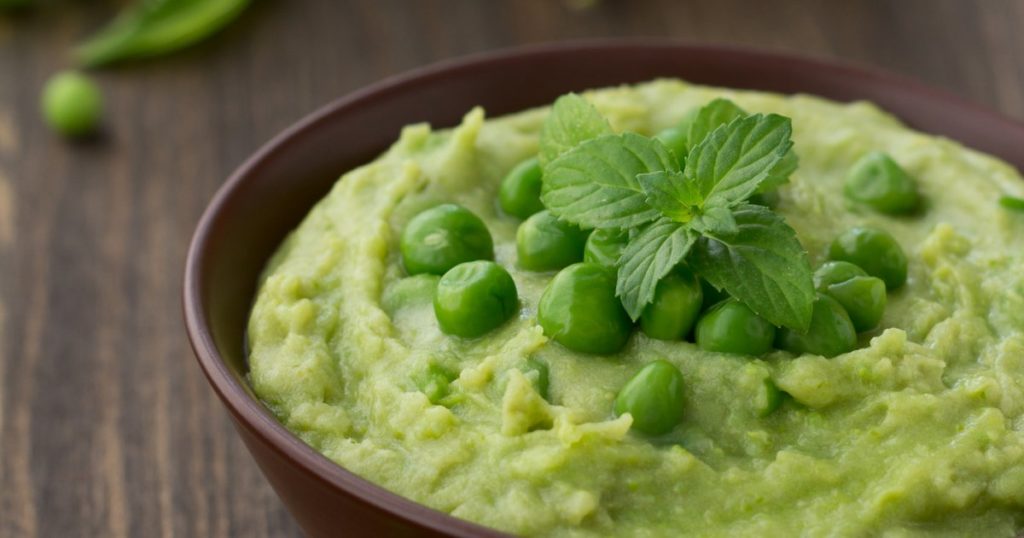
Pea pods
Pea pod purée (serves 2 to 3)
==> for Thermomix, click here
Ingredients
500 g very fresh pea pods (not fibrous if possible)
1 medium potato (to bind the purée)
1 onion or 1 shallot
1 garlic clove
2 tbsp olive oil
1 tsp lemon juice
1 pinch of cumin or nutmeg (optional)
Salt and pepper to taste
A little water or plant-based milk to adjust the texture
Recipe
Prepare the pods
- Wash the pea pods.
- Remove the strings if they are a little tough or fibrous (optional but recommended for a smoother texture).
- Chop them roughly.
Cooking
- Sauté the sliced onion in the olive oil with the garlic.
- Add the potato, peeled and cut into pieces, then the pods.
- Add just enough water to cover, and season with salt and pepper.
- Simmer over a medium heat for 20-25 minutes, until the pods and potato are very tender.
Blend
- Drain (keeping a little of the cooking water), then blend until smooth with a stick blender or a blender.
- Add a drizzle of olive oil, the lemon juice, the spices and a little cooking water or plant-based milk to obtain a smooth texture.
Finishing
- Taste and adjust the seasoning.
- For an even smoother texture, you can pass the purée through a sieve or a chinois.
Tips
For a more indulgent version, add a spoonful of cashew butter or tahini.
This purée can also be used as spread cold with a squeeze of lemon and a little fresh mint.
Goes very well with grilled tofu or grain patties.
Food & wine pairings
1. A dry, fresh white
Sauvignon white (e.g.: Sancerre, Touraine, Coteaux du Giennois)
→ Aromas of citrus, boxwood, green gooseberry… perfect for highlighting the fresh, green flavour of the pods.Gascony white (Colombard or Ugni Blanc grape)
→ Simple, fruity and lively, perfect for an easy, light pairing.
2. A white wine with a little more roundness
Chenin white (e.g.: Vouvray sec, Saumur blanc)
→ To play on the sweetness of the purée while keeping a mineral tension.Vermentino (e.g.: Corsica, Languedoc, Sardinia)
→ Lovely floral, herbaceous aromatics, very nice with the smooth texture of the purée.
3. Natural or biodynamic option
A natural white wine (a local grape variety such as Grenache Blanc, Clairette, Aligoté…) with little added sulphur, slightly oxidative or, on the contrary, very lively.
→ A very on-trend pairing of vegetables and living wine, for a raw, authentic tasting experience.
4. To serve cold (as a spread)
A very pale rosé (e.g.: Côtes-de-Provence, young Bandol rosé)
→ Ideal as an aperitif with a fresh purée flavoured with mint or lemon.A white or rosé pét-nat
→ For a funky pairing, with light bubbles and lovely liveliness.